
HOW TO RECONSTITUTE
WHAT IS RECONSTITUTION?
Reconstitution means adding a suitable liquid to a powder to turn it into a solution. The correct liquid and amount depend on the specific product.
WHAT YOU’LL NEED


STEP-BY-STEP GUIDE
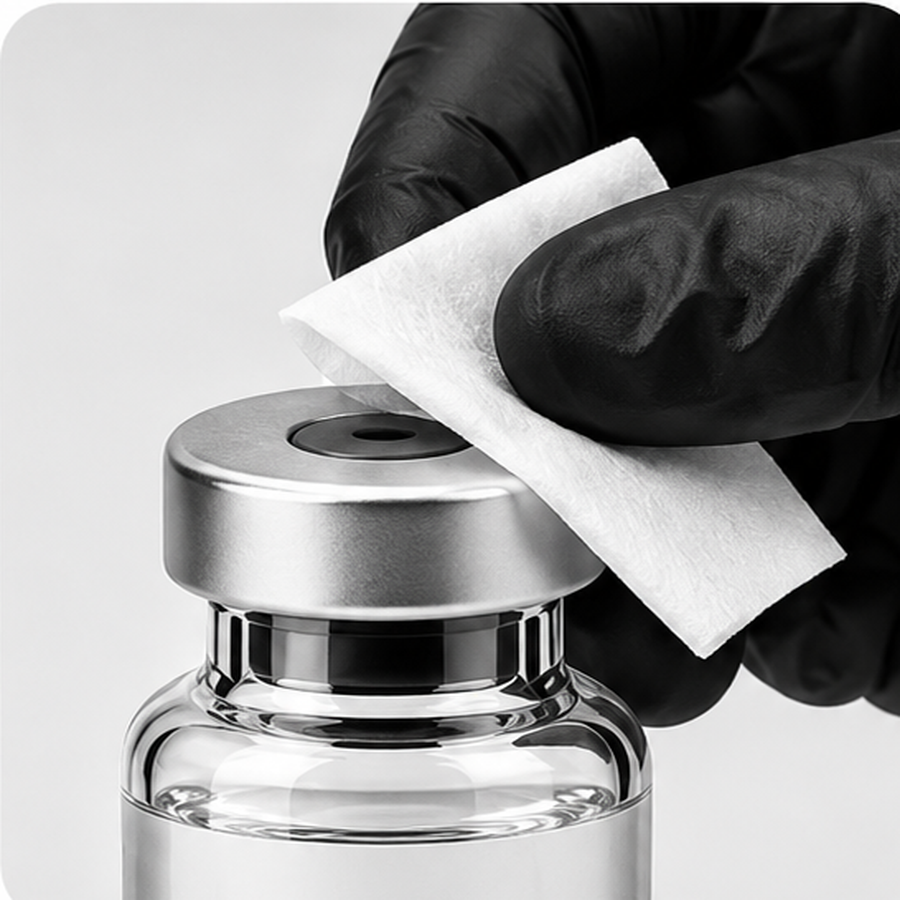
01 — REMOVE CAPS & CLEAN
Remove the protective caps from both vials. Wipe the rubber stoppers with an alcohol swab and allow them to dry.
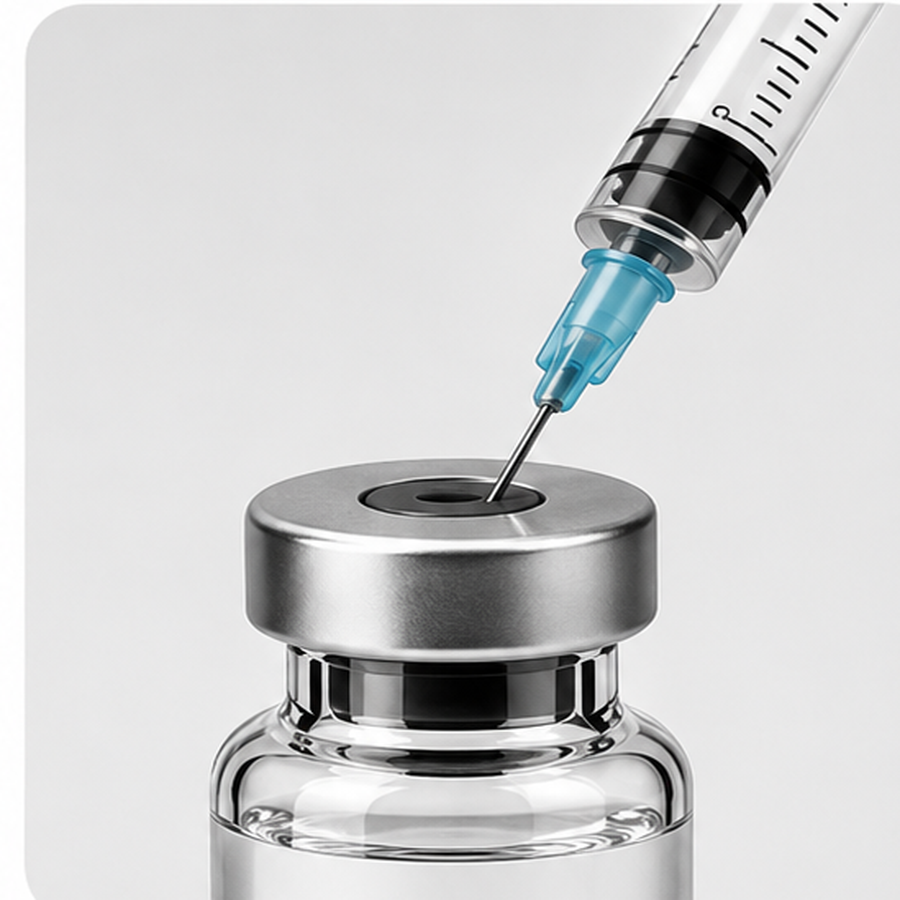
02 — MEASURE & DRAW BAC WATER
Draw air into the syringe equal to the amount of BAC water needed (e.g. 100 units of air in, 100 units of water out, using the same U-100 syringe). Inject the air into the BAC water vial to equalise the pressure, making it easier to withdraw the water. Then draw up the required amount of BAC water, checking the measurement carefully.
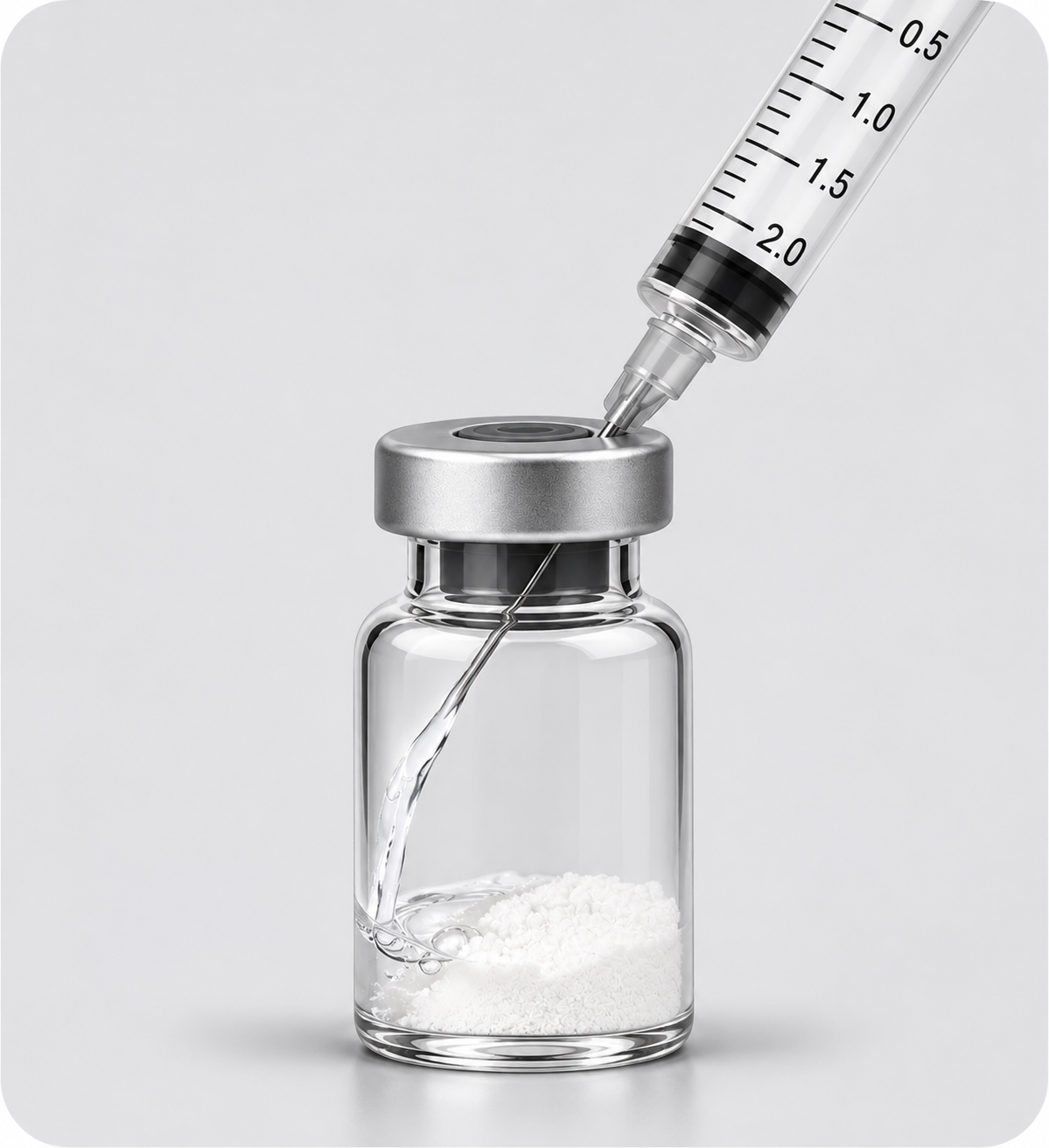
03 — ADD BACTERIOSTATIC WATER
Slowly inject the bacteriostatic water down the inside wall of the glass vial, allowing it to gently run down the side. Avoid squirting the water directly onto the peptide powder to minimise agitation during reconstitution.
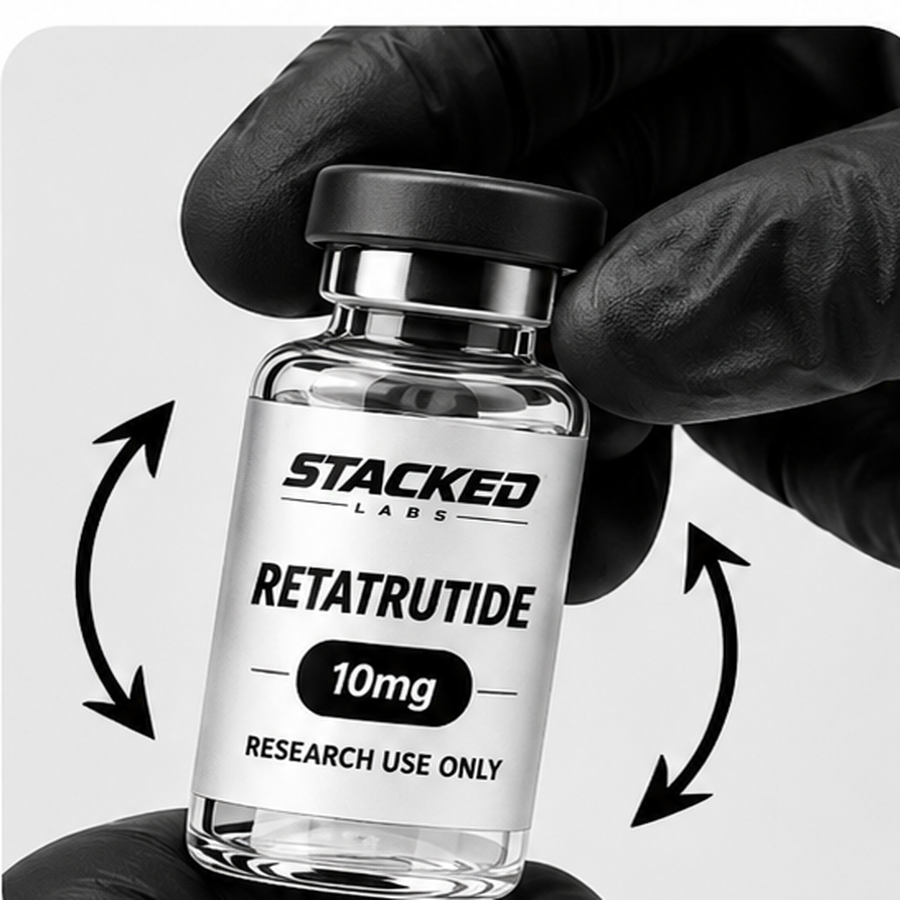
04 — GENTLY MIX
Gently swirl or roll the vial until the powder has dissolved. Avoid vigorous shaking unless otherwise specified.

05 — CHECK & STORE
The solution should be clear and free from visible particles. Store refrigerated at 2–8°C unless otherwise specified in the Research Protocol Guides.
EXPLORE MORE RESOURCES
For general research education only. This is not a validated preparation protocol or an instruction for human use. Always follow compound-specific requirements.